arrangementer
September 14, 2026– The main challenge in cabin areas isn’t total energy use, but that so many use power at the same time. If the local grid can’t handle the load, we get power outages, says Roar Børresen, Head of Projects and Development at Gudbrandsdal Energi Nett (GEN).

Møre Trafo Seminar
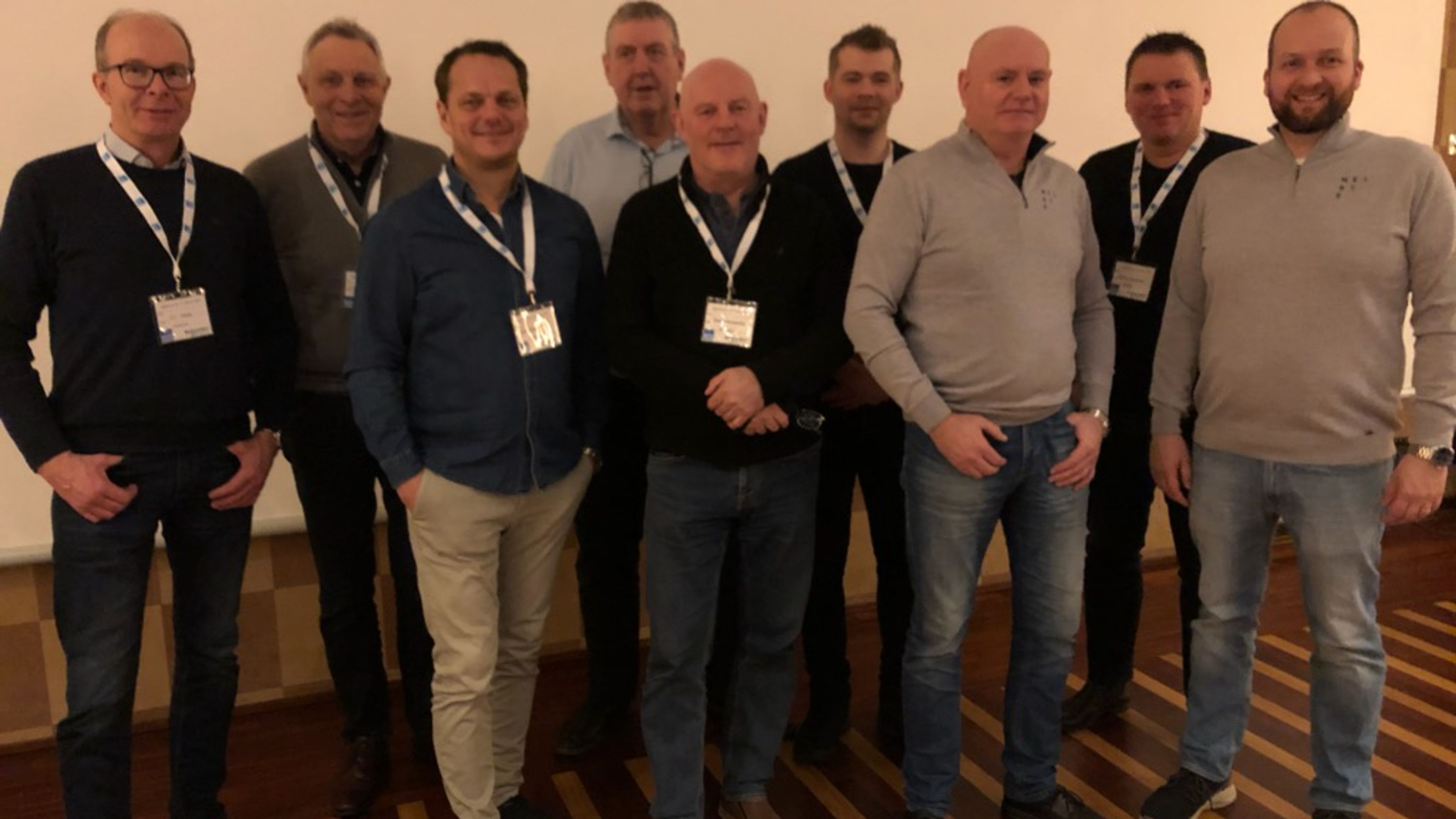
In front of a record number of participants – 83 – on Møre Trafo’s annual floating course and conference to Kiel, Børresen, one of the speakers, talked about the challenges for a grid company facing a major increase in customers. The growth comes solely from the sharp rise in cabin construction, especially in the areas around Hafjell and Kvitfjell.
Mostly Cabin Customers
GEN supplies a district with little or no population growth, but has seen a remarkable 24 percent increase in the number of customers over the last 10 years, due to extensive cabin development in the region. GEN now has 8,400 household customers and 8,700 cabin customers.
EV Charging
Electric vehicles and charging are the key reasons why the grid in cabin areas must be upgraded – and at times is at risk because of the high simultaneous load. In both new and existing cabin developments, GEN sees strong demand from cabin owners who want to install EV chargers at their cabins – many also want two chargers.
NVE has previously calculated that the grid can handle 1.5 million electric vehicles in 2030. The big catch is that this calculation assumes that many of the cars are charged at night, when overall power consumption is low.
A Lot of Power at Once
When many cabins upgrade the power supply to 3-phase 32 amps, it can challenge the local substation because a lot of power is drawn in a short time. A Tesla charger alone needs up to 32 amps. The sauna and induction oven draw 25 amps, and on top of that you have heating. From Monday to Thursday it’s no problem; it’s on weekends and during holidays that it “explodes.”
Consequences in 2040
GEN now maps how power demand will develop towards 2040, and the consequences and scenarios, in collaboration with Pöyry:
“If afternoon charging continues, you have to replace 10 percent of today’s low-voltage lines, 6–8 percent of today’s transformers must be replaced, cabin municipalities will be particularly exposed to higher grid costs, there is significant potential in reducing the peak load, and the consequence for GE Nett is 200 million kroner in increased investment costs,” says Børresen of the preliminary analysis.
Doesn’t Believe in Capacity Tariffs
Introducing capacity tariffs is meant as a measure to cut peak loads and reduce or even out power consumption over the day. You then have to pay more for electricity if you use a lot in periods when the capacity price is higher, and it will be expensive to plug in the car as soon as you arrive at the cabin and, for example, cook dinner at the same time.
“To be honest, I don’t really believe much in capacity tariffs when it comes to cabin owners, who for the most part are very well-off people,” says Børressen.
Smart EV Chargers
He believes more in using smart EV chargers. With smart meters (AMS) you can use these. They make sure charging only happens when the power price is low, or they actively switch off other high-load consumers, and in that way control the “surplus power.”
Great arena
Børresen has also previously taken part in the technical seminar that Møre Trafo organizes in cooperation with Scheider Electric Norge AS.
“It has become a great arena to meet suppliers and colleagues. To solve the challenges we will face with the green transition and electrification, we can no longer sit in our own silos, but must cooperate and share competence and knowledge to a much greater extent,” says the Head of Projects and Development at Gudbrandsdal Energi Nett AS.
The seminar brings together customers and suppliers, and as usual the venue for the seminar held from 5 to 7 February was Color Line sailing to Kiel.
Cabins and Challenges
Among this year’s topics was building charging stations for ferries using construction contributions, a topic Runar Tandstad at Mørenettvar covered. Over ten years, the number of customers has increased by 24 percent for Gudbrandsdal Energi Nett. The increase comes from extensive cabin construction, especially at Hafjell and Kvitfjell. The challenges this creates were the topic for Ror Børresen at Gudbrandsdal Energi Nett.
Competence
Odd Arne Grebstad presented the competence that Teknor represents, and conscious or unconscious choice of materials in grid operations was the topic of the presentation by Kåre Olav Bratberg, KOB Consulting, before the first day ended socially with entertainment and dinner at the Grand Buffet on Color Line.
Substations and Cabling
REN provides expertise to companies that work with facilities for the transmission of electric power. They develop industry guidelines, share knowledge through courses and conferences, and operate emergency preparedness schemes for Norwegian grid and power companies. Jørn Berntzen from Hafslund is part of REN’s project group on “substations”, and he shared his knowledge of substations and cabling during the seminar.
Recycling
RENAS is Norway’s leading return company for electrical and electronic waste, owned by Elektroforeningen (EFO) and the industry association Elektro og Energi. It’s all about recycling and sustainability, and the topic for Bjørn Erik Thon from RENAS was circular economy in power supply.
Environment
Environment and sustainability also framed the closing presentation by Geir Eikemo from Univar Solutions about a transformer oil made from methane gas that becomes an oil with very good properties for the transformer – sustainable and environmentally friendly.
Great meeting place
The technical seminar that Møre Trafo organizes together with Schneider Electric has become a great meeting place and arena for the industry, both professionally and socially. This year’s record turnout proves it.
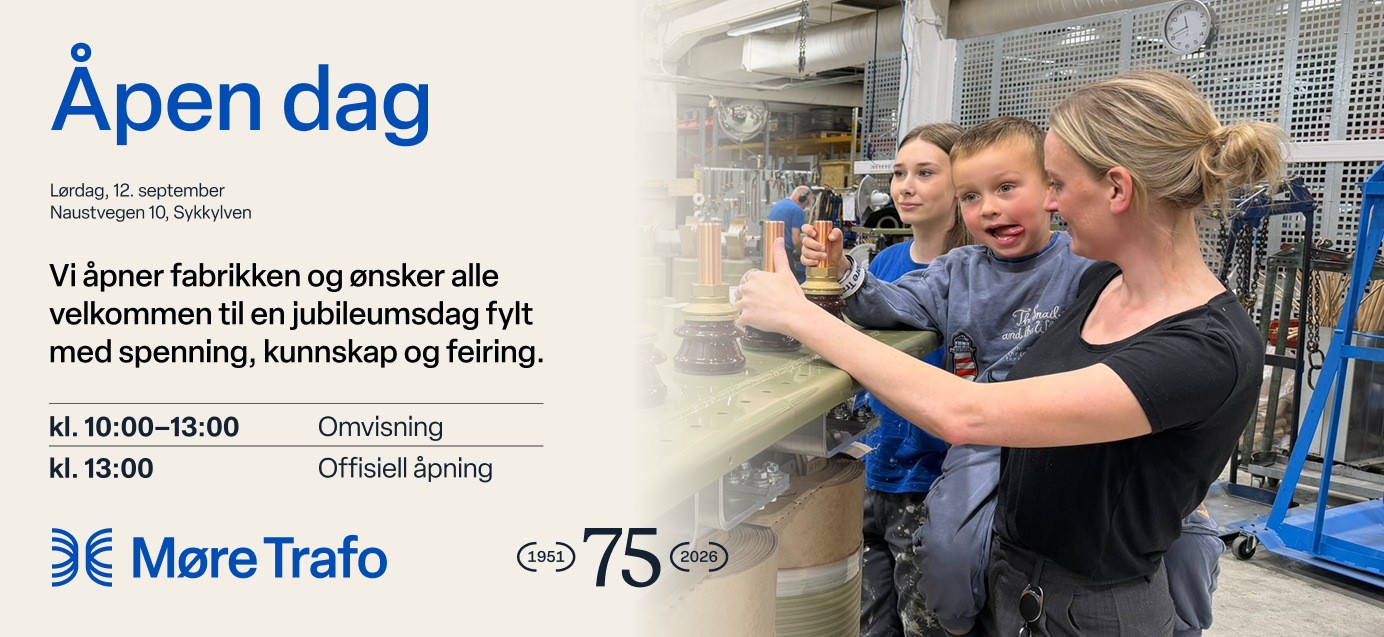
On Saturday, September 12, Møre Trafo invites you to an open house in Sykkylven. We are opening the factory gates and welcoming visitors of all ages for a day of tours, activities, and a look at how transformers and substations are made. We are also celebrating the opening of our new substation factory and 75 years as a local industrial company.
Read moreStay up to date with projects, insights and news from our daily work.
Read more