arrangementer
September 14, 2026To keep outages as short as possible and fix faults as fast as possible, there are emergency stockpiles. Like the Scouts, Møre Trafo is always prepared, with a standing emergency stock of transformers at all times.
Calm contingency summer
– This year has been a quiet summer for the contingency stock. The good weather is probably the main reason, along with significant investments in the grid in recent years, says Sales Manager Ivar Lifjeld at Møre Trafo.
At all times, Møre Trafo keeps a large emergency stock of transformers for the most common ratings and voltages in the distribution grid. Production for the emergency stock mainly takes place in the winter season.
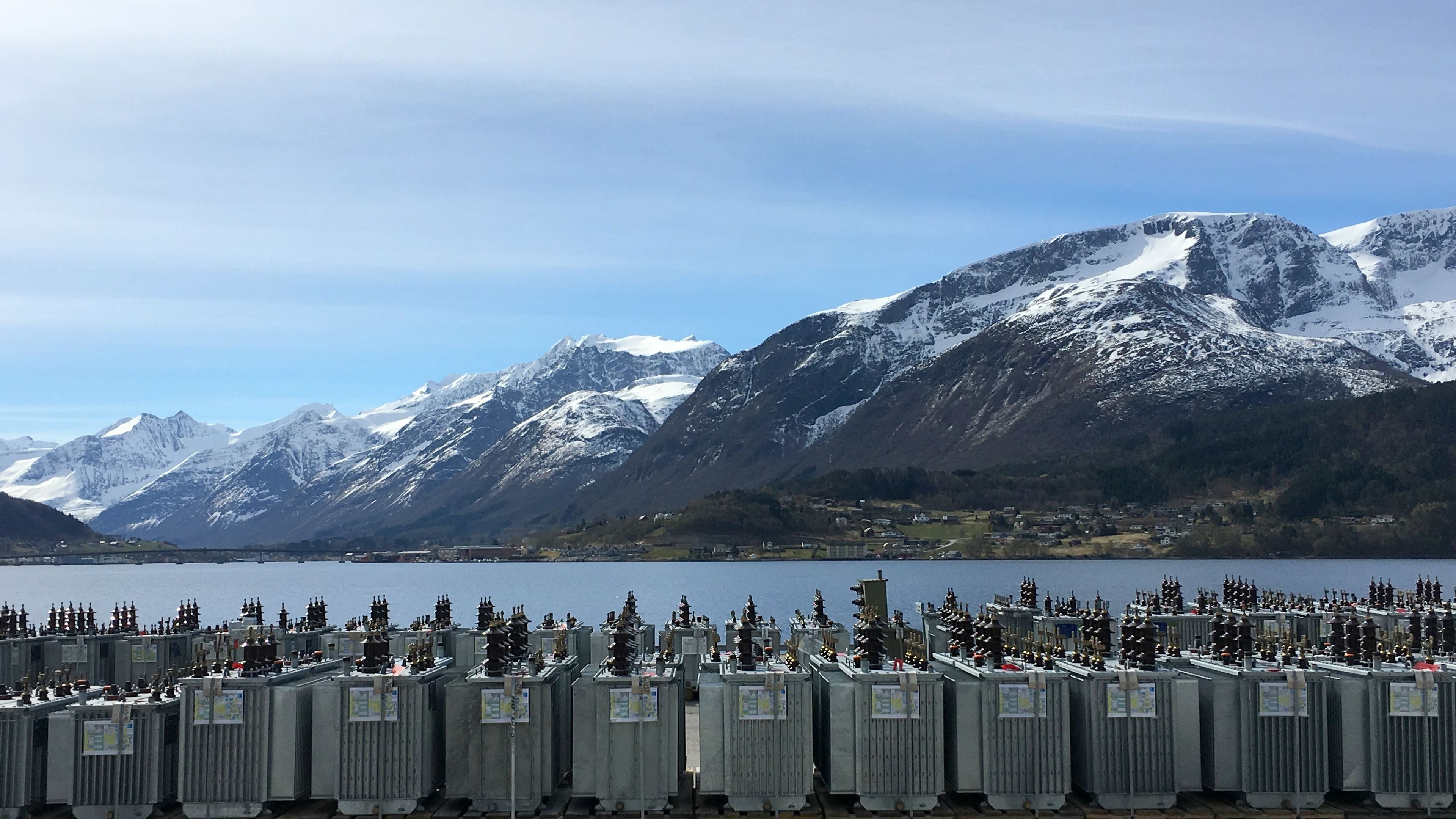
Quiet summer for the emergency stock
Critical transformers
“All grid companies must have an emergency stock. In today’s society, it’s becoming more and more important to have a secure and reliable power supply,” says Lifjeld.
If a transformer is damaged, for example due to lightning and thunder, Møre Trafo will always have units available through its emergency stock. Transformers are especially important for preparedness because you cannot bypass a faulty transformer the way you can when there is a fault in components at the same voltage level, such as switches, cables, and lines.
Why the Power Fails
External factors that affect the installations – like wind, thunderstorms, snow, ice, trees, birds, and animals – are the most common causes of power outages, according to Statnett’s fault statistics. Wind tops the list (29.4 percent), followed by vegetation, unknown causes, thunderstorms, and snow and ice as the main ones. In addition to external influences, 23 percent of outages are due to technical faults, according to the statistics.
The figures show the national average, but the situation is the same for Møre og Romsdal, except for thunderstorms (11.6 percent), which are probably somewhat higher here in the county. (The percentages show the share of energy not delivered as a percentage of the amount of energy that would have been delivered without interruptions).
Number of Outages
Over the last 20 years, the number of power outages has fallen, except in 2011 when the storm Dagmar hit. In twenty years, the number of megawatt-hours that did not reach the customer due to outages has dropped from 50,000 to just over 11,000 megawatt-hours, which is less than one-tenth of a thousandth of annual power consumption. The most recent outage statistics from the Norwegian Water Resources and Energy Directorate (NVE) are from 2017, when national supply reliability was 99.998 percent.
Each customer, or end user, on average experienced 0.3 planned and 1.4 unplanned long interruptions. Each long interruption on average lasted one hour and six minutes. In addition, each end user experienced 1.6 short interruptions lasting less than three minutes.
More Power Outages
Despite a steady decline, you can’t rule out more power outages in the years ahead. Climate researchers warn of more storms and heavier rainfall. According to a report from NVE, lightning activity may increase by as much as 25 percent towards 2050.
Investments
From 2017 through 2025, estimates show the power grid needs investments of NOK 140 billion. These investments improve supply security and support new consumption patterns and increased use of renewable energy.
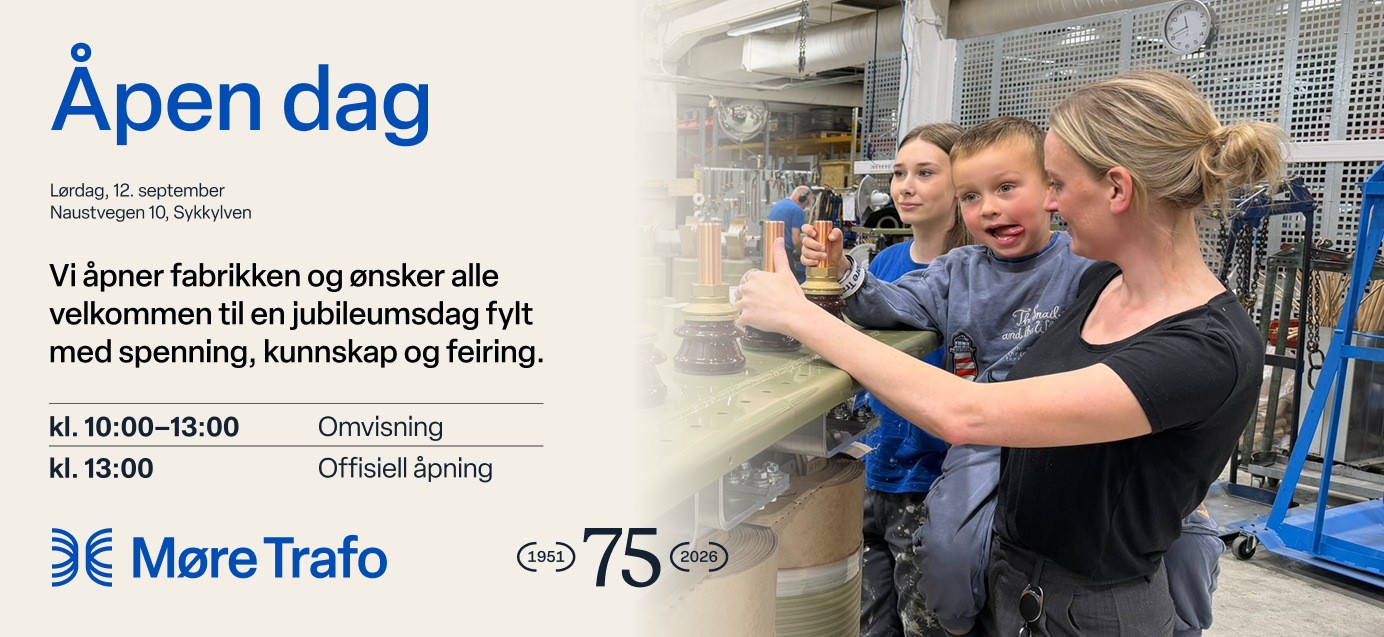
On Saturday, September 12, Møre Trafo invites you to an open house in Sykkylven. We are opening the factory gates and welcoming visitors of all ages for a day of tours, activities, and a look at how transformers and substations are made. We are also celebrating the opening of our new substation factory and 75 years as a local industrial company.
Read moreStay up to date with projects, insights and news from our daily work.
Read more