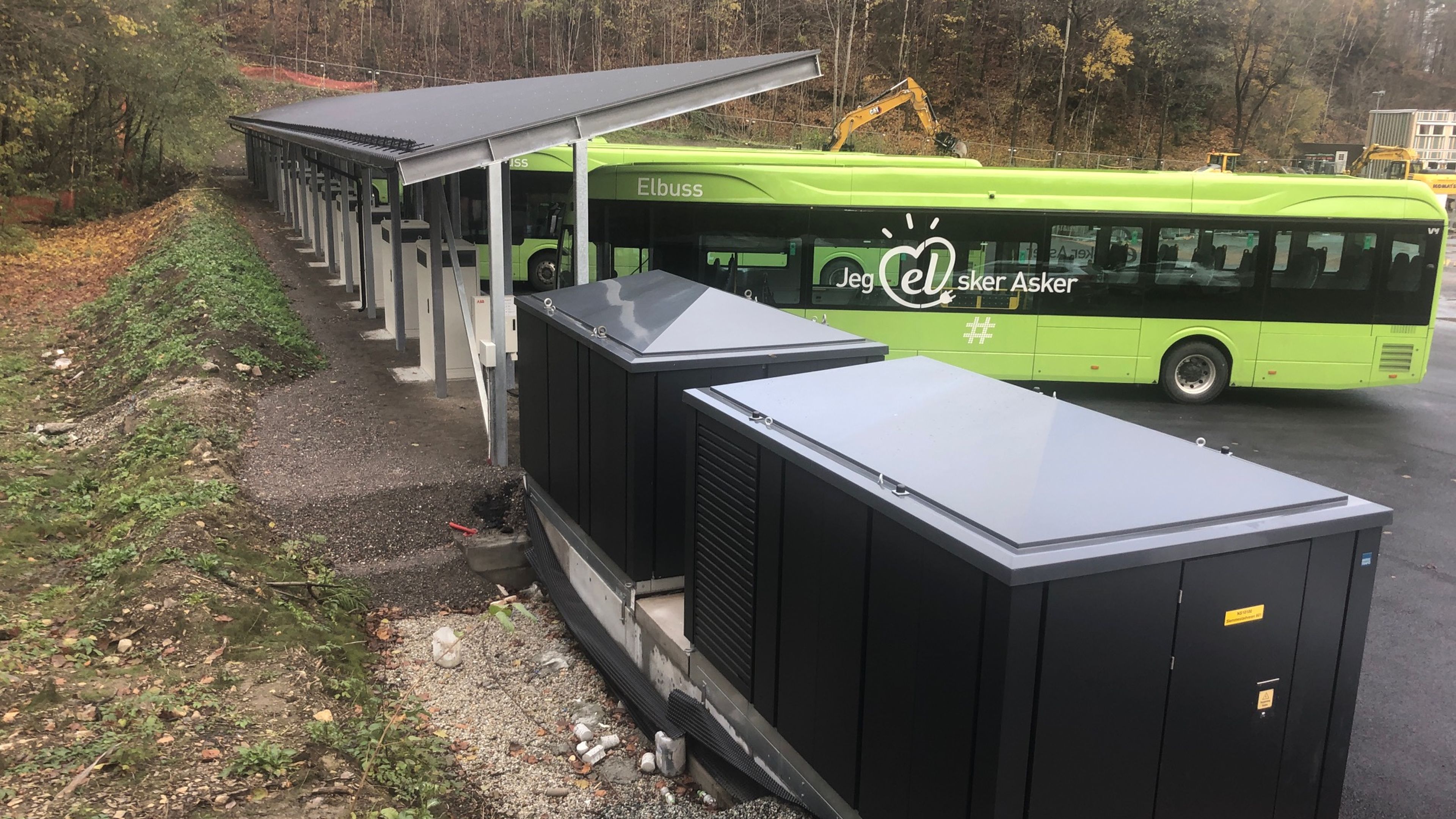
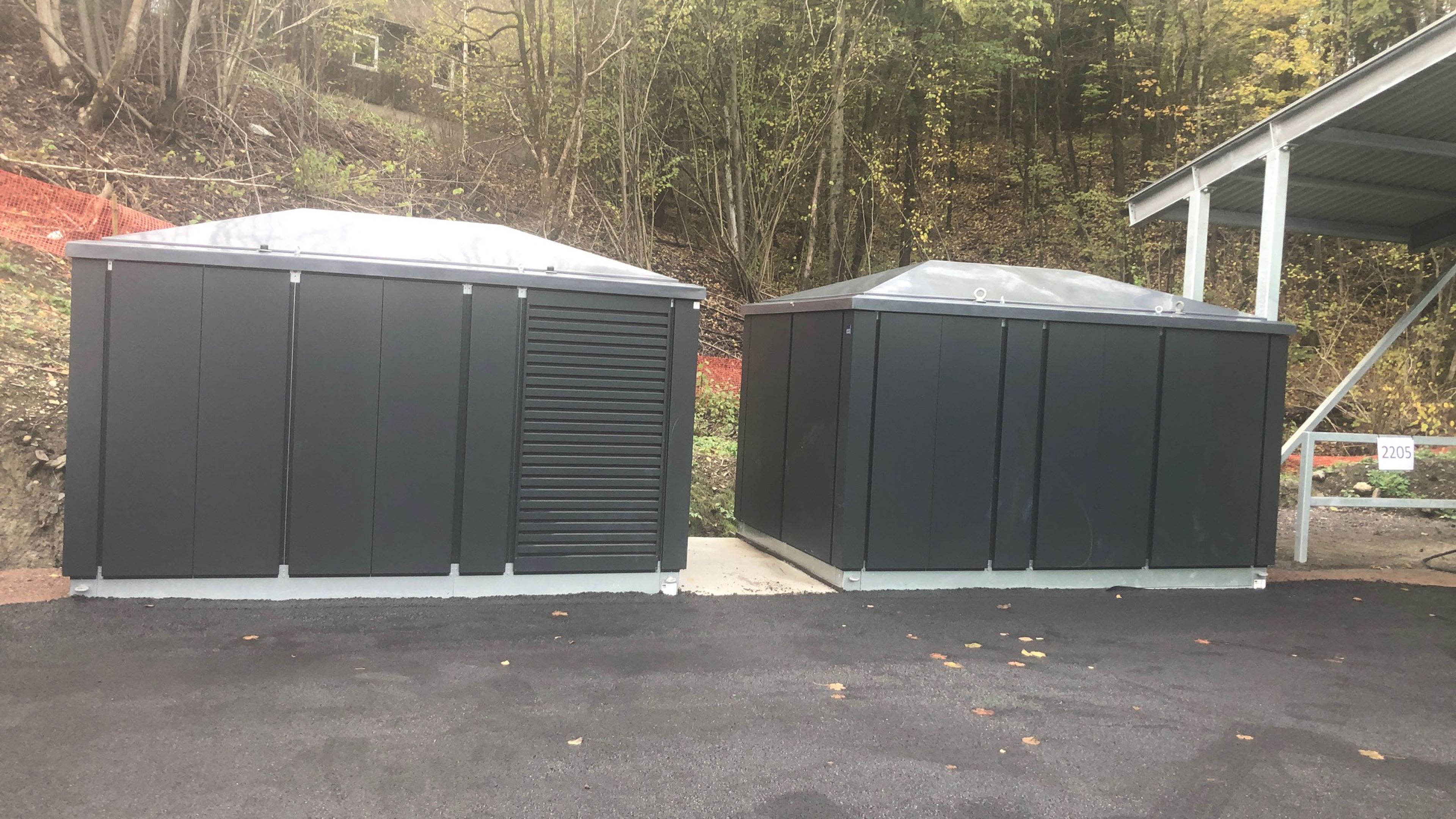
The transformers and substations for e-bus charging in Slemmestad for Norway’s largest bus company VY-buss are delivered by Møre Trafo. The green transition is expected to become a major market for Møre Trafo.
Møre Trafo powers the green bus shift
Møre Trafo has also delivered transformers to the Nordic region’s largest charging facility for buses at Alnabru. The site has 10 MW of power installed and is set up so 30 buses can charge at the same time. Twelve of them can fast charge.
2019/2020 is seen as the big breakthrough for electric buses in Norway. This year there will be around 400 electric buses nationwide. 10 of them will run in service in Ålesund, operated by Vy. These will be the first electric buses in Northwest Norway.
Green Transition
– The traditional market with buildings, infrastructure and rail is still the largest market for Møre Trafo. But the green transition and data centers are the part that grows fastest and will eventually become a significant share of our market, says Tore Tangen, District Manager East/West Norway at Møre Trafo.
Tore Tangen, District Manager for East/West Norway.
Charging Stations
The goal of a 100 percent zero-emission bus fleet means, among other things, that you need many charging stations. Vy Buss has ordered a total of 55 electric buses. 28 of them are intercity buses, and the buses will have chargers in places including Hamar, Haugesund, Oslo and Slemmestad in Akershus.
Møre Trafo leveranser
– At Slemmestad, which is a terminus, Møre Trafo has delivered a 1600 kVA transformer with biodegradable oil, installed in a Maxi substation that also contains the high-voltage system and a separate Maxi substation for low-voltage switchboards supplying power to the chargers, says Tangen about the delivery where OneCo Sør is the contractor.
The delivery from Møre Trafo to the Nordic region’s largest charging infrastructure for electric buses at Alnabru is 4 x 2000 kVA 415 V transformers.
Fully Electric by 2028
Today Ruter accounts for over half of the country’s public transport. The ambition is that all buses, boats, minibuses, and taxis operating for Ruter will have zero-emission operation by the end of 2028. In practice, that means electrifying all of Ruter’s modes of transport.
“Our calculations show that it is an ambitious but realistic goal. We will demand and adopt technology that will over time provide more cost-effective solutions,” says Ruter CEO Bernt Reitan Jenssen.
Bus Emissions
Bus operations are the most complex part of public transport to make emission-free. 90 percent of emissions from public transport come from buses. Today, around 40 percent of the buses running in Oslo are electric. At the same time, fleets of electric buses are being phased in across a number of other Norwegian cities, and the technology is in demand in more and more tenders, according to the trade journal Yrkesbil.
Ålesund
In Møre og Romsdal, Ålesund is the first to roll out electric buses. 10 new Vy electric buses went into service at the turn of the year and will run routes in Ålesund, Giske and Sula. The buses are expected to cover a total of 750,000 kilometers per year. The emission cuts equal 420 fossil-fueled cars. The electric buses from Volvo (Volvo 7900E) are 12 meters long, have a battery capacity of 330 kWh and a range of around 200 km. The experience from the electric buses in Ålesund will form the basis for further electric bus deployment in Møre og Romsdal.
Starting Small
“Electric buses are new to us. So it makes sense to start with a few buses and then expand over time. We need to know that they perform well in the weather and road conditions we have here, and that the charging infrastructure works as it should before we bring in more electric buses,” says Jesper Wiig, Head of Operations at FRAM, Møre og Romsdal’s own brand for public transport, which has signed a contract with Vy.
Trouble Ahead
Even though things are starting to happen on the electric bus front, especially in the Oslo area, there are still a number of challenges related to costs, grid capacity, and space in urban areas. In most places the power grid must be reinforced and expanded to handle the load from large fleets of electric buses that need charging, and the charging infrastructure takes up a lot of space in cities.
Expensive Electric Buses
Total ownership costs for electric buses are still quite a bit higher than for buses with combustion engines. The additional costs are around 10–15 percent compared to combustion buses. Even though prices are coming down and operating expenses for an electric bus are a full 24 percent lower than for a diesel bus, electric buses are still expensive to buy.