Configurator
Door and Vent Configurator
Find the right door and vent combination for your substation.
Downloads
You can find more documents and guides in the download center
Accessories
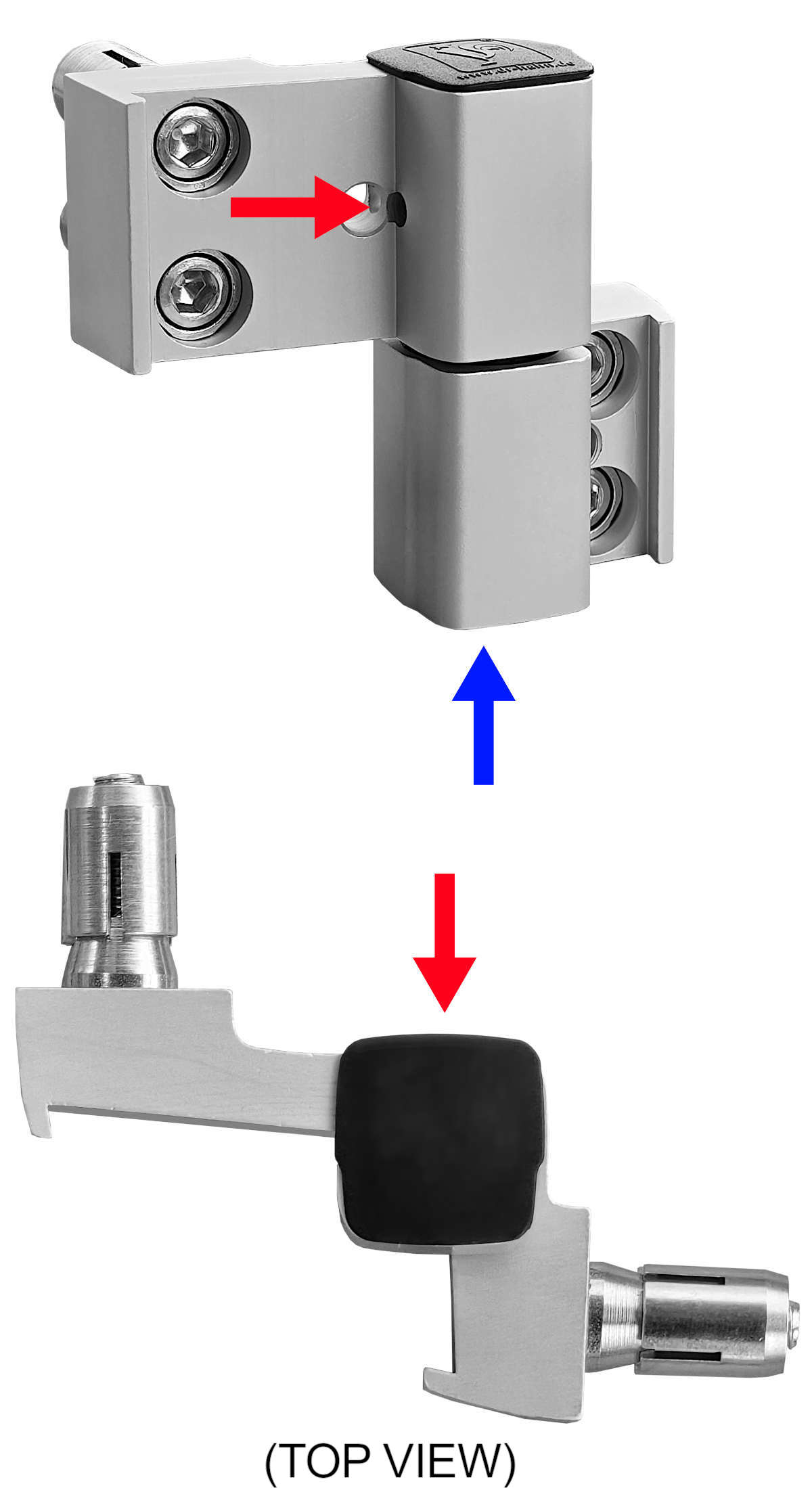
All MTD doors use the same type of hinges. The hinges are CE-marked and withstand significant compressive and tensile forces. They have a maintenance-free bearing bushing to stay durable and stable even under intensive use.
Maintenance
None.
Operation
One person can use the hinges to adjust the door leaves in six directions. You need 3, 4, and 6 mm Allen keys to make the adjustments.
Rotation Adjustment
To adjust the door leaf sideways, use the adjustment screws on the side and back of the hinge.
Height Adjustment
To adjust the door leaf vertically (in height), use the adjustment spindle located on the underside of the hinge. This adjustment lets you raise or lower the door leaf by +3 mm up or −2 mm down.
Adjusting Sealing Pressure
To adjust the door leaf’s sealing pressure against the door frame (inwards or outwards), you must lift the door off the hinges. Then remove the cover cap and pull out the bearing bushing after the hinges are separated. You can rotate the bearing bushing into 4 different positions when you put it back, which gives a play of ±0.5 mm.
Doors with a removable threshold have the threshold mounted with brackets. If you unscrew these two brackets, you can pull the threshold out horizontally and the door becomes frameless at the bottom. This is useful when you need to drive a forklift, trolley or similar through the door.
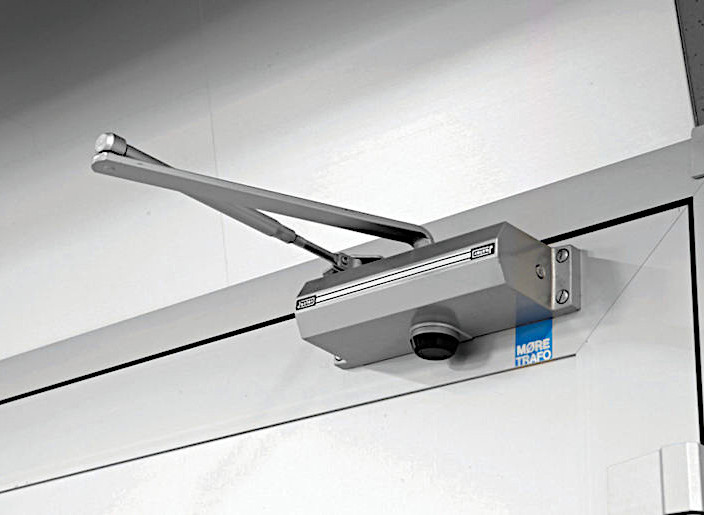
The door closer is pump-based and makes sure the door closes from any opening angle. You can carry out periodic checks of the arm system and swing door automation, but it is not required.
Maintenance
Check and tighten the fasteners. You can adjust opening and closing speed as needed. Lubricate if needed if it moves slowly.
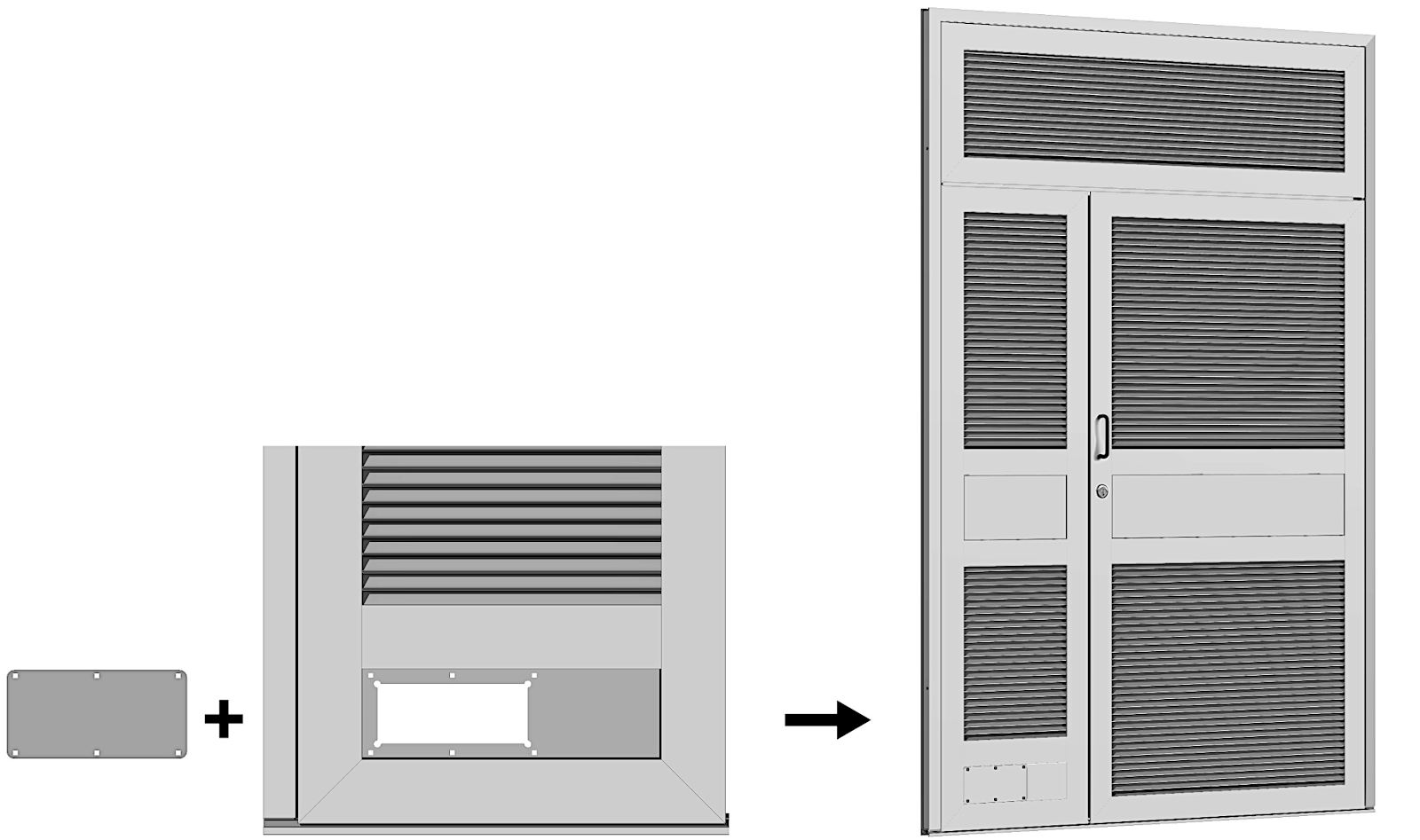
The emergency power hatch is intended for temporary cable entry. The hatch is a 200 x 80 mm opening at the bottom of the door, covered by a 240 x 120 mm plate made from the same material as the door leaf. You can loosen the plate with screws and set it in two different positions for half or full opening.
Operation
If the emergency power hatch has been used, you should check and tighten the bolts that hold the plate in place when you reset it to closed.
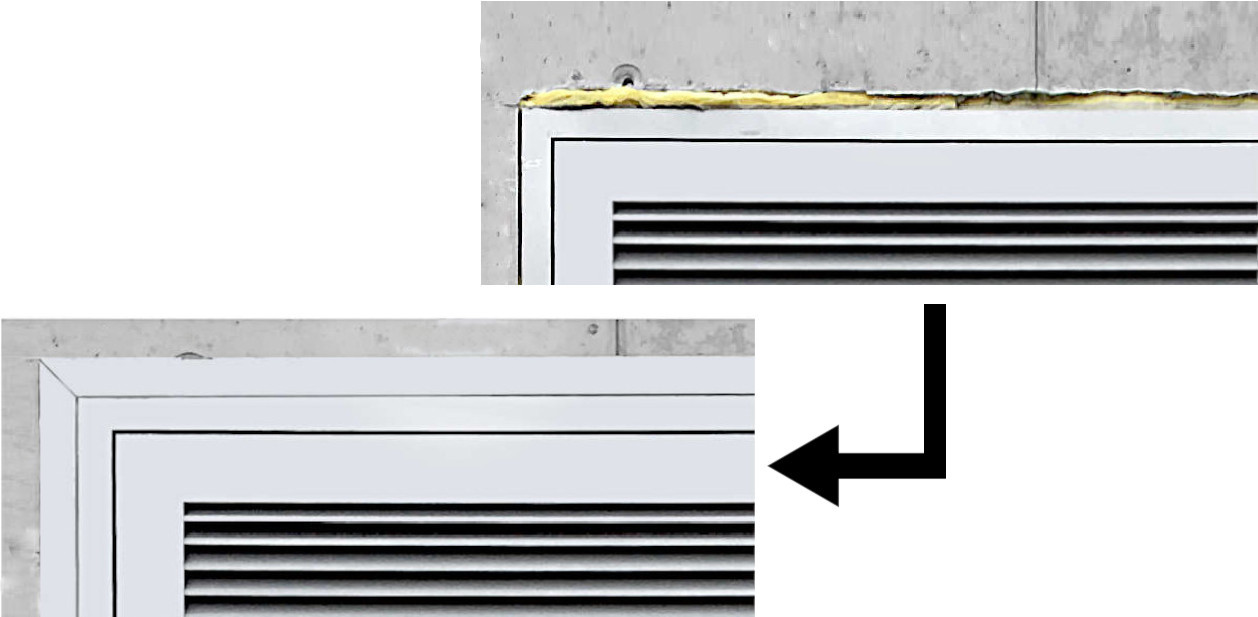
External trim for doors gives a flush finish and functional closure by covering the gap between the door frame and the wall with a flange around the door. The trims use the same materials as the door and come pre-mounted from the factory.
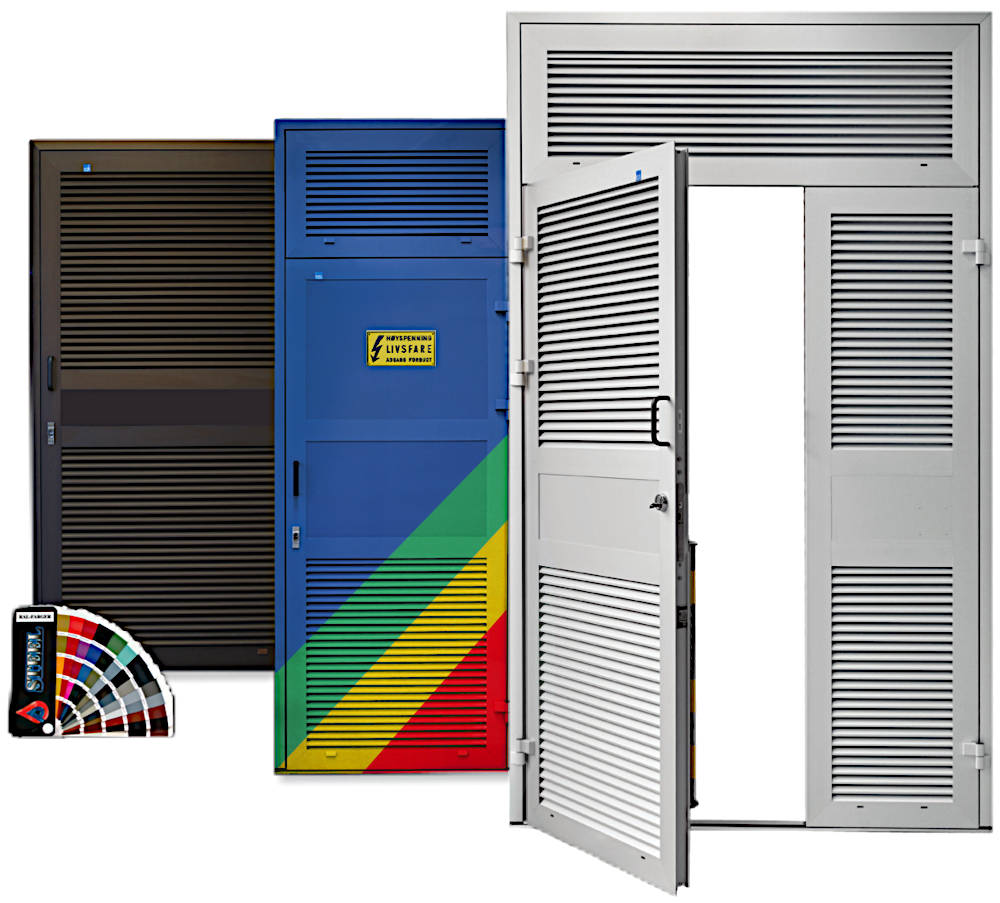
Our doors and vents come with industrial surface treatment in any RAL color.
The coating we use is Cromax Imron® Fleet Line – a system originally developed for heavy transport and demanding maritime environments. The treatment is a "High Solids" (HS) 2-component system that gives a good balance between elasticity and hardness. The process uses a specialized Non-Sanding Primer-Surfacer (e.g. NS2607) that ensures optimal chemical adhesion and corrosion protection without breaking the surface film. The topcoat is formulated to withstand aggressive chemicals, mechanical wear, road salt, and intense UV radiation without fading or cracking over time.
This gives a product with a very long service life, even in demanding Norwegian weather conditions.
Maintenance
The surface repels dirt and needs minimal maintenance. To keep the warranty and gloss in corrosive environments (near sea/road), we recommend annual cleaning: Rinse with fresh water to remove salt deposits. Wash with a neutral detergent (pH 5 to 8). Avoid abrasive brushes or strong solvents.
You can use wax or polish if you need to restore maximum gloss.
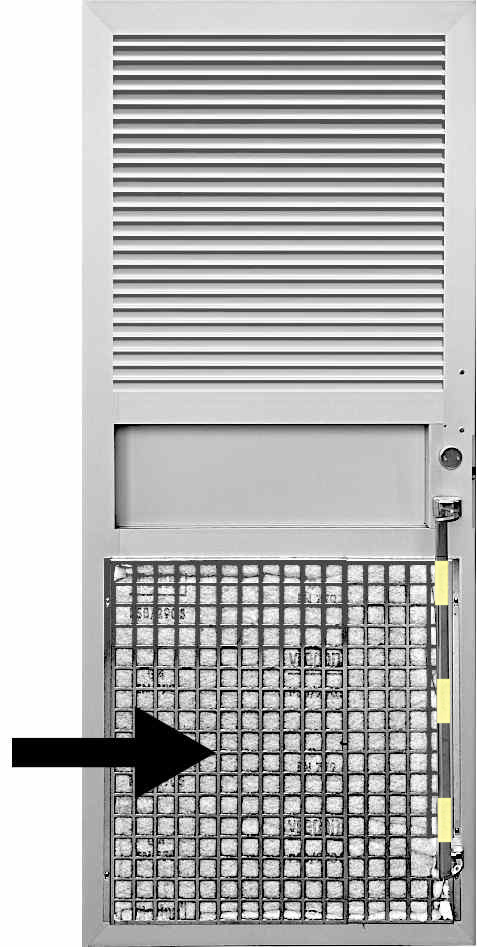
Valves supplied with mounted filter cassettes have a filter cloth fitted in a steel cassette on the inside of the door. The filter cloth (type G4, Filter Class EN779:2012) is made of thermally bonded synthetic polyolefin fibers and is chemically resistant to solvents, acids, and alkaline liquids. The filter cloth should not be exposed to constant UV radiation.
Maintenance
We recommend that you periodically check the filter’s air flow capacity, especially in maritime environments with high salt levels, and consider cleaning it to avoid reduced performance of the vents. You can clean it, and it maintains its filtration properties even after washing (rinsing) or vacuuming. To remove stubborn dirt such as grease, salt, and organic material, we recommend using an alkaline cleaning agent with a pH value between 8 and 10. After using detergent, you must rinse the filter thoroughly with water to remove all soap residue before it dries.
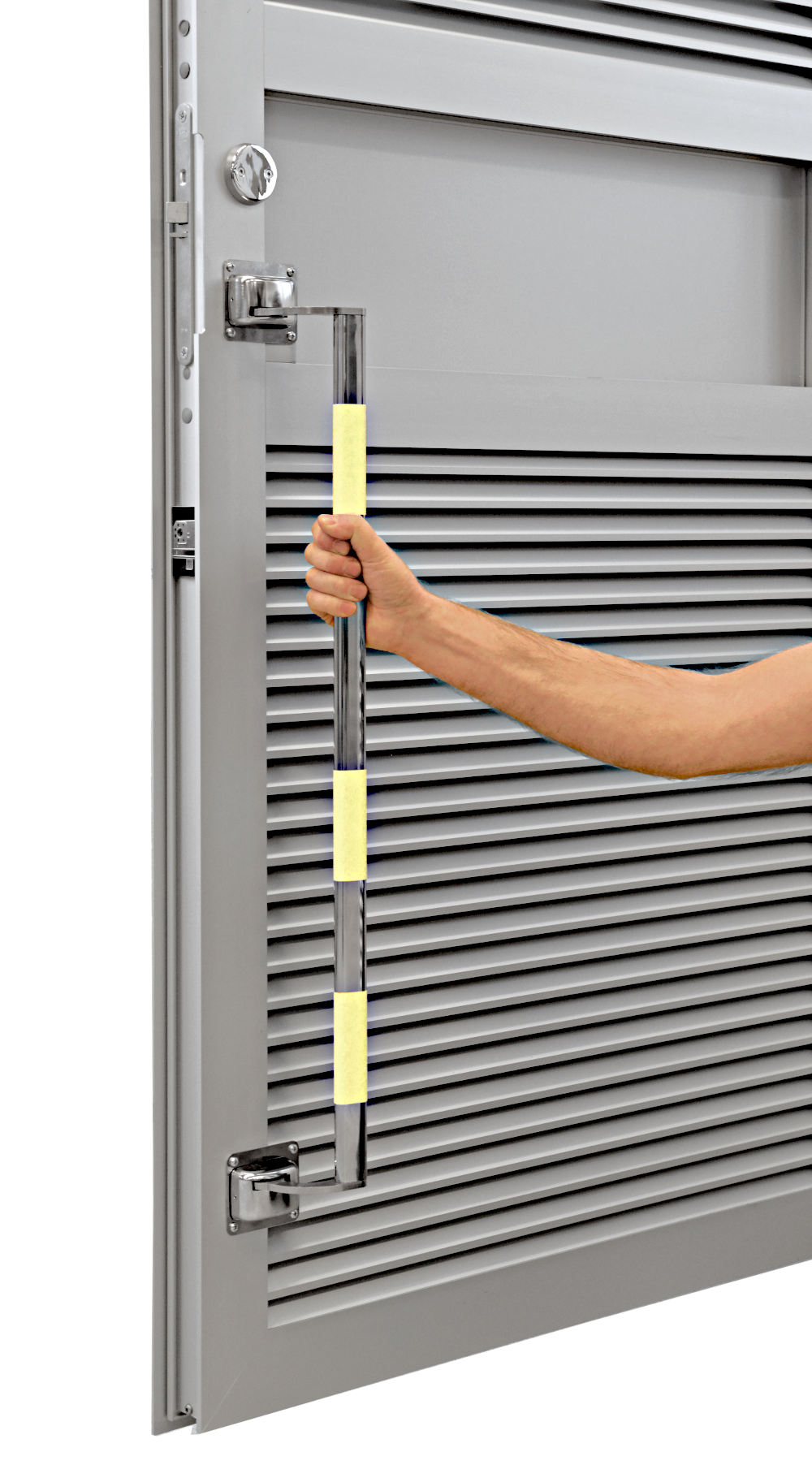
Vertical panic hardware ensures quick and easy door opening. Use it where public regulations require it, and anywhere you want to open the door with another part of the body than your hand (standing or crawling).
Maintenance
Perform periodic maintenance. Check that the panic hardware works as it should (i.e. the locking points release when you press the bar, the door opens freely, and the door lock engages when the door closes). Make sure all moving parts and strike plates are free of dirt and debris to prevent jamming. Check that the hardware is not blocked in normal use. Make sure no extra locking devices have been added to the door (e.g. padlock fittings or similar).
As an option, the doors can be supplied with a mechanical door closer of the Justor FR type, designed to slow the closing speed and prevent hard slamming. The unit works as a spring-based retarder and engages during the last approx. 10° of the door’s movement, ensuring controlled, quiet and safe closing without any need for hydraulics, gas damper or electrical supply. The solution improves user comfort and reduces wear on hinges, frame and locking components.
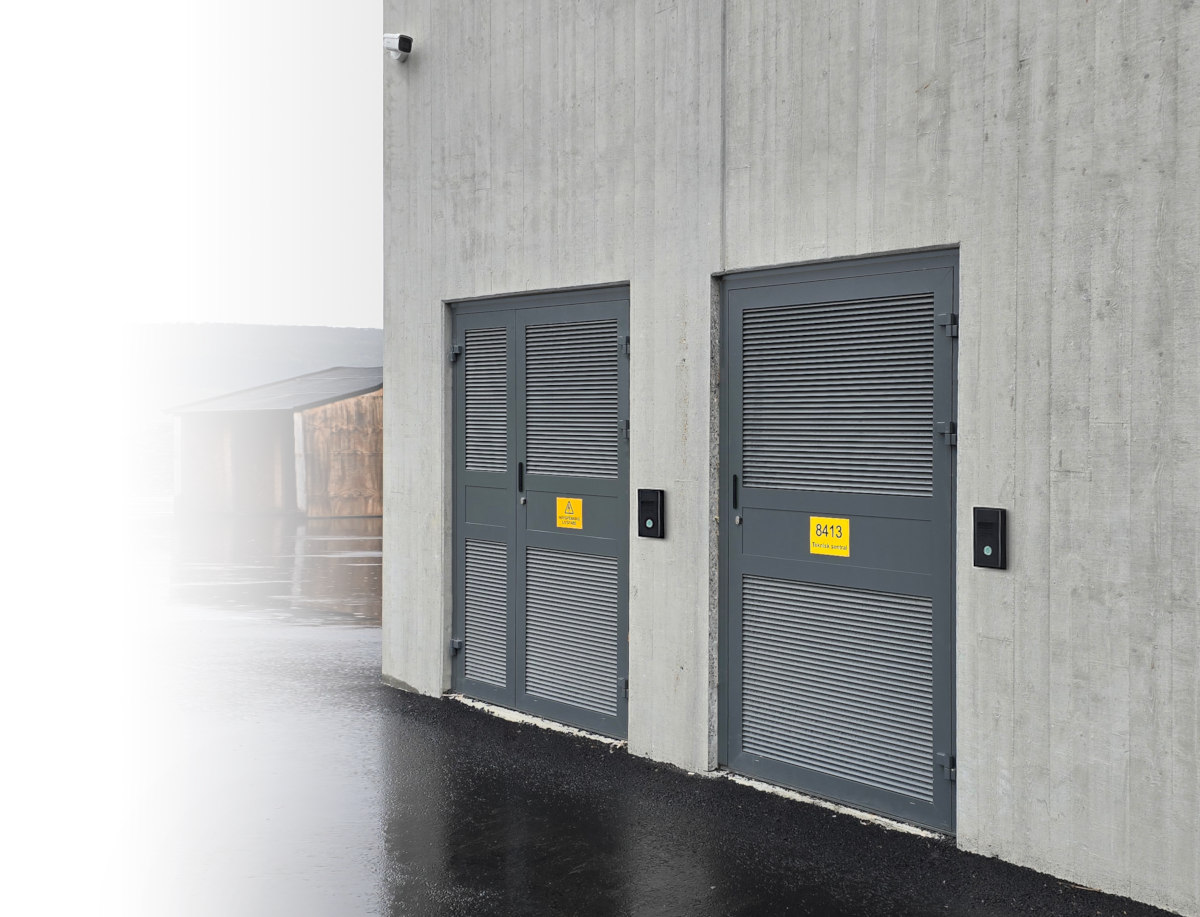
Doors can be delivered with an electronic lock case and integrated door sensors as an alternative to our standard doors with only a mechanical key lock. These solutions give you much higher security and avoid administration costs and risk from lost keys.
Typical standard solution
830C50 Hi-O MOTOR LOCK FG CL 3. Control unit I/O BOX 360. Panic fitting EX-5201 /-02. EA281 door frame transfer.
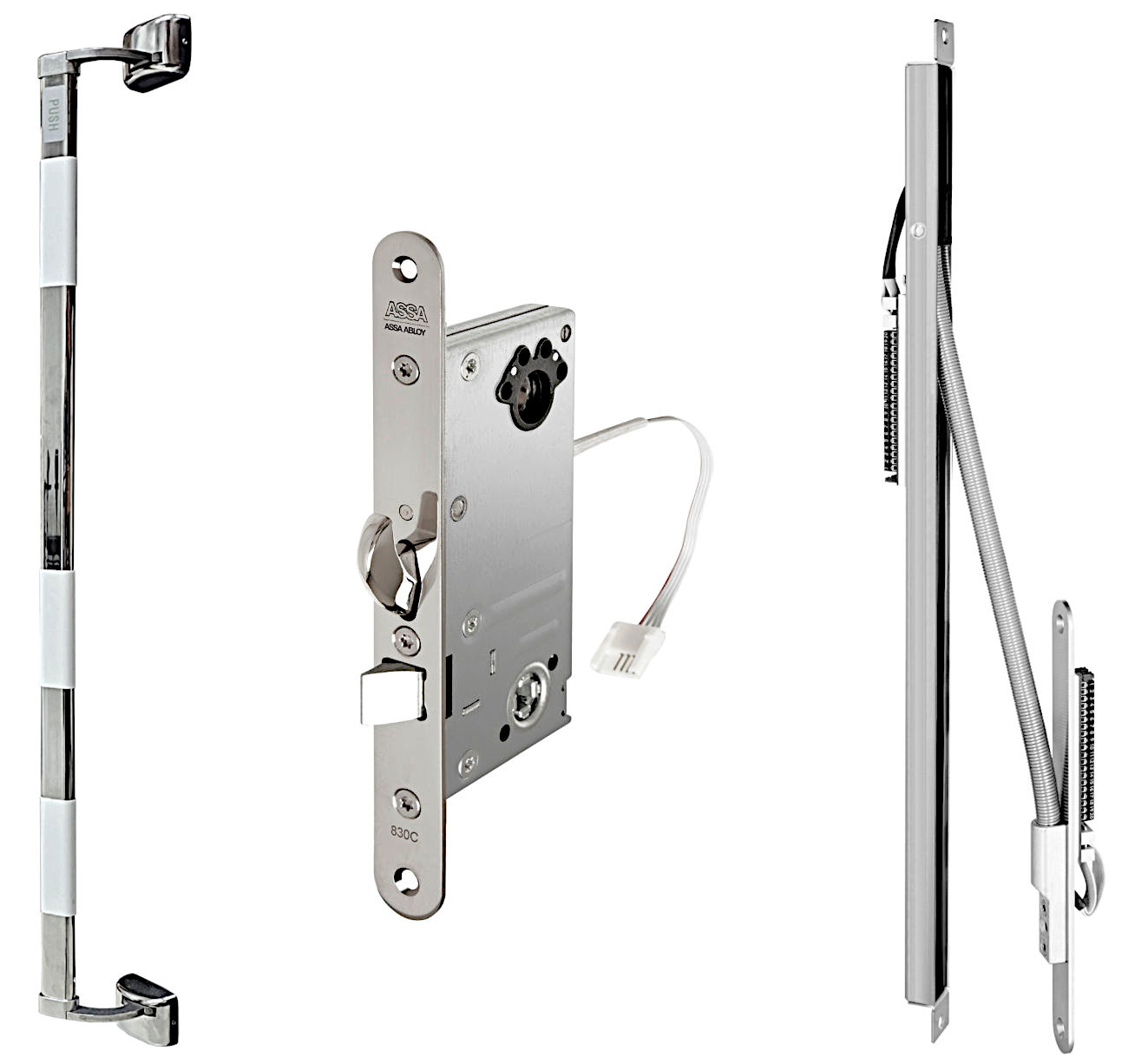
Technical data I/O360 control unit incl. motor lock
Operating voltage: 24VAC/DC +/−15%. Power consumption: max 475 mA. Relay: single-pole changeover relay max 50VDC at 1A. Cable: EA226 cable.
Operating voltage: 12–24VAC/DC −10 +15%. Power consumption: max 445 mA (24VDC).
Operation
See the individual products’ respective data sheets.
Maintenance
Check that the sleeve for the frame transfer slides easily into the recess. Check the lock case annually to make sure all screws are securely tightened. Use Loctite to prevent the screws from loosening. Inspect moving mechanical parts annually and lubricate the latch and deadbolt with lock grease as needed. For FDV panic hardware, see 2.8 Panic Hardware.
Tighten the mounting screws. Test the mechanical function with the key. Check the electrical connections. Lubricate lightly with lock grease. Avoid metal shavings and similar particles.