Møre Trafo: Powering One of Norway’s Toughest Ferry Routes
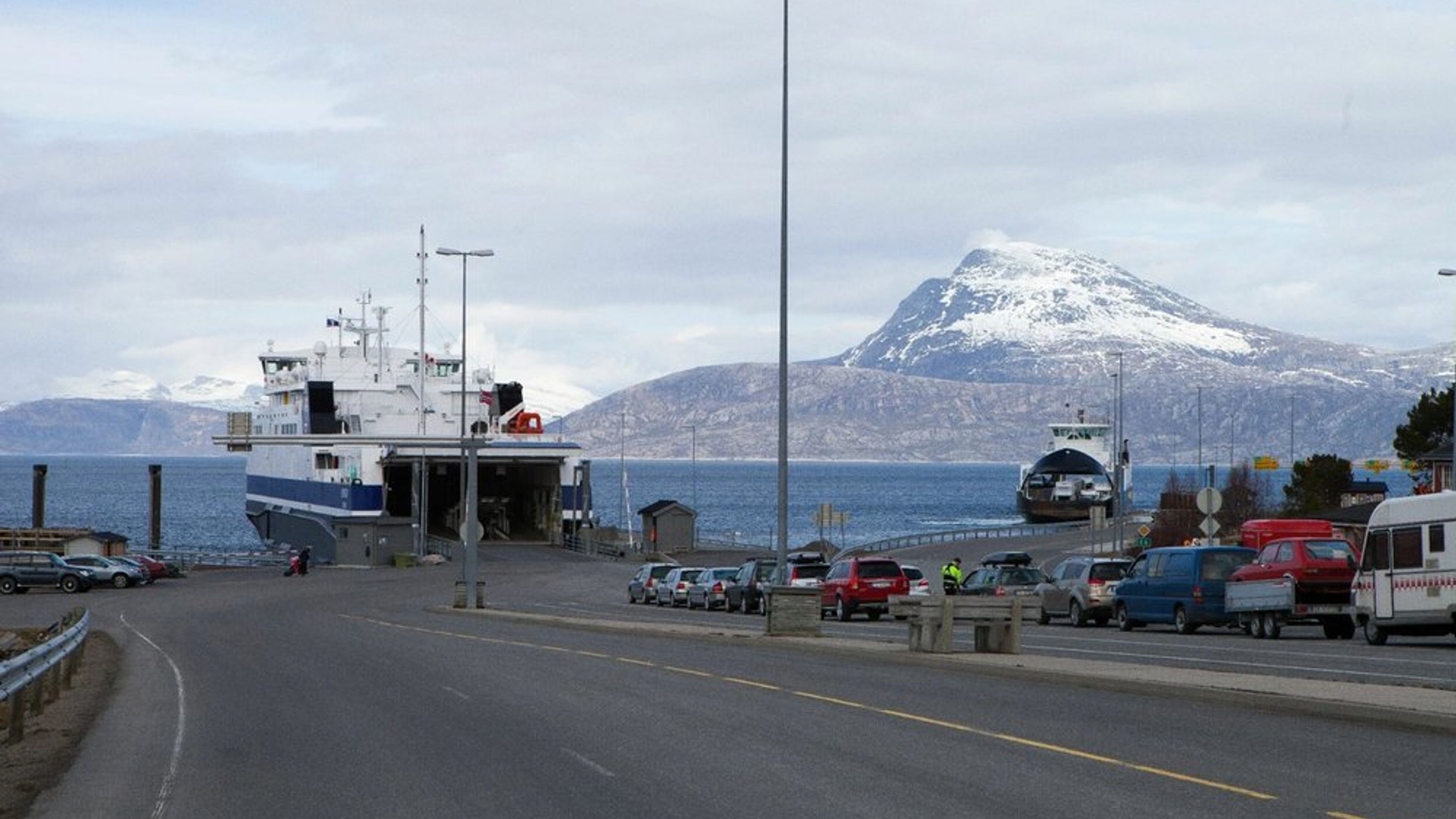
Photo: Statens Vegvesen
“A demanding project with many challenges,” says Bjørn Lade about Møre Trafos involvement and deliveries to the project that Statens Vegvesen calls a milestone for the green transition at sea.
22 kilometers
The ferry connection is part of national road 85, the crossing time is 60 minutes and the ferry route is 22 kilometers long. Torghatten Nord operates the route with three battery ferries from 2024, with 11 departures daily in each direction on weekdays and 21 in summer.
“Not long ago, many would have said it was impossible to operate an electric ferry on such a long and demanding route,” said Division Director Bjørn Laksforsmo at the Norwegian Public Roads Administration to NTB when the contract with Torghatten Nord was signed.
Size Becomes a Challenge
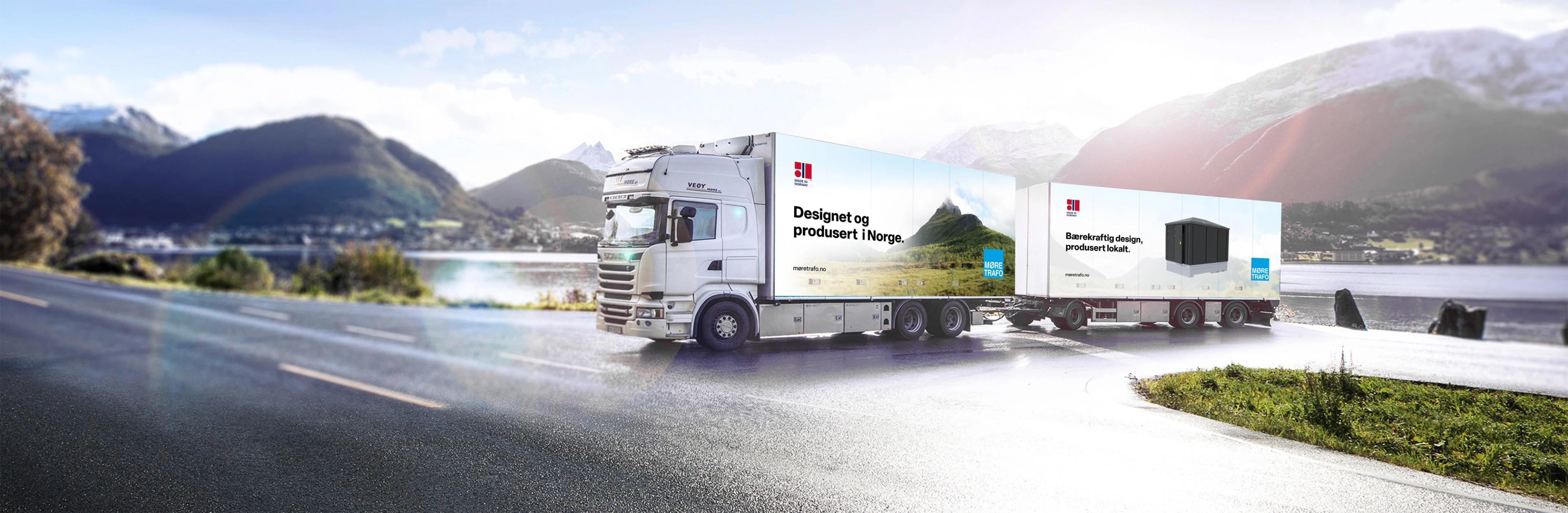
A total of six fully loaded trucks from Møre Trafo were loaded at the same time to handle transport of all the equipment to be delivered. According to Bjørn Lade, Møre Trafo’s biggest challenge was probably the size of the installation, with a full 8 MVA installed capacity split between 2 x 4 MVA transformers 22000/11000 V. The size is due to the long ferry crossing, where the ferries have to charge a lot of power during short layovers.
Photo: Bjørn Lade, Møre Trafo
Needs cooling
“The transformers are overloaded for short periods when the ferries are at the quay. To be able to cool the transformers back down, two powerful fans are installed in each of the two substations at Lødingen and Bognes. To reduce noise from the fans, their speed is controlled by a thermostat and a PLC (programmable logic controller),” explains Bjørn Lade.
Challenging Design
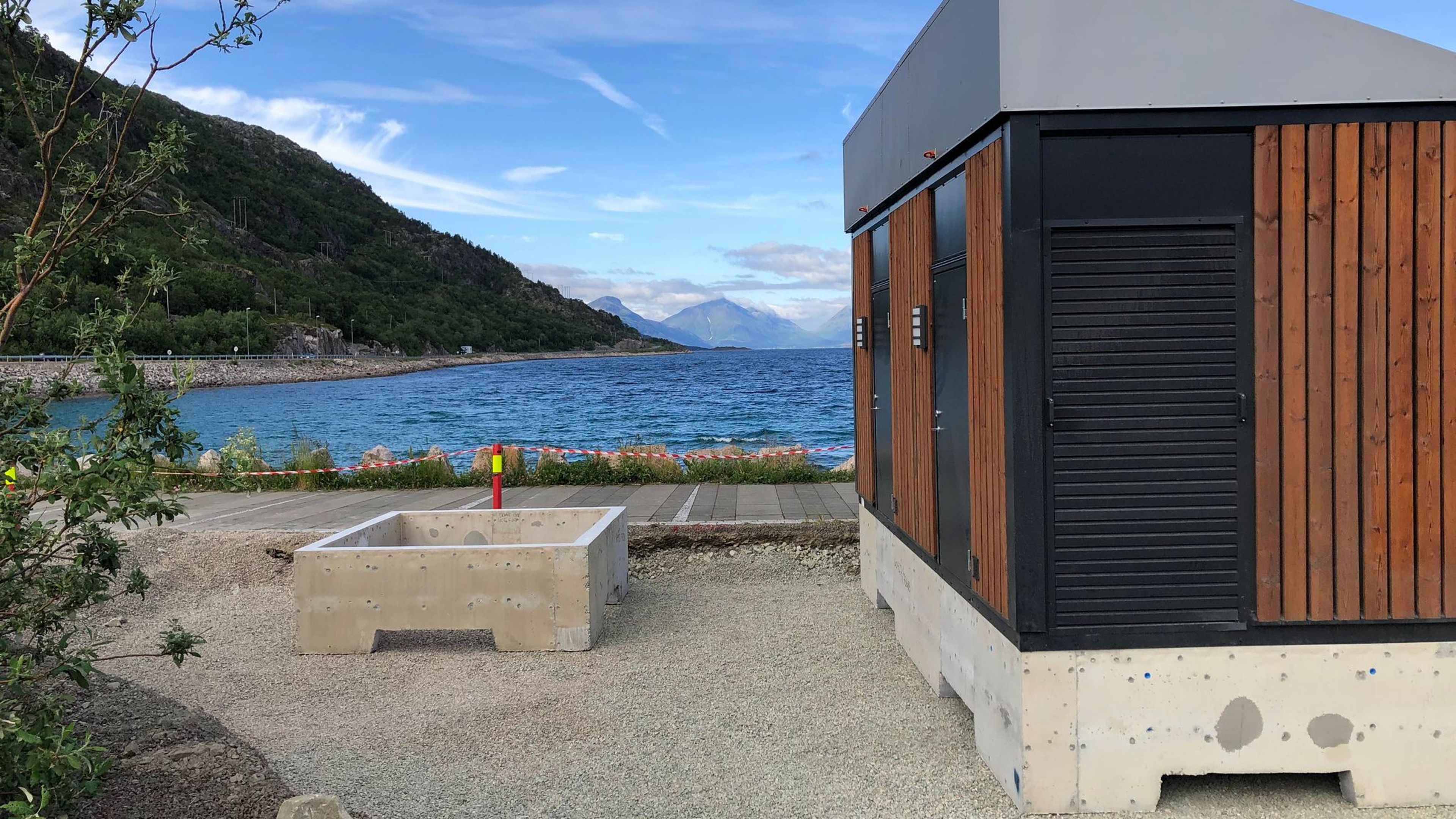
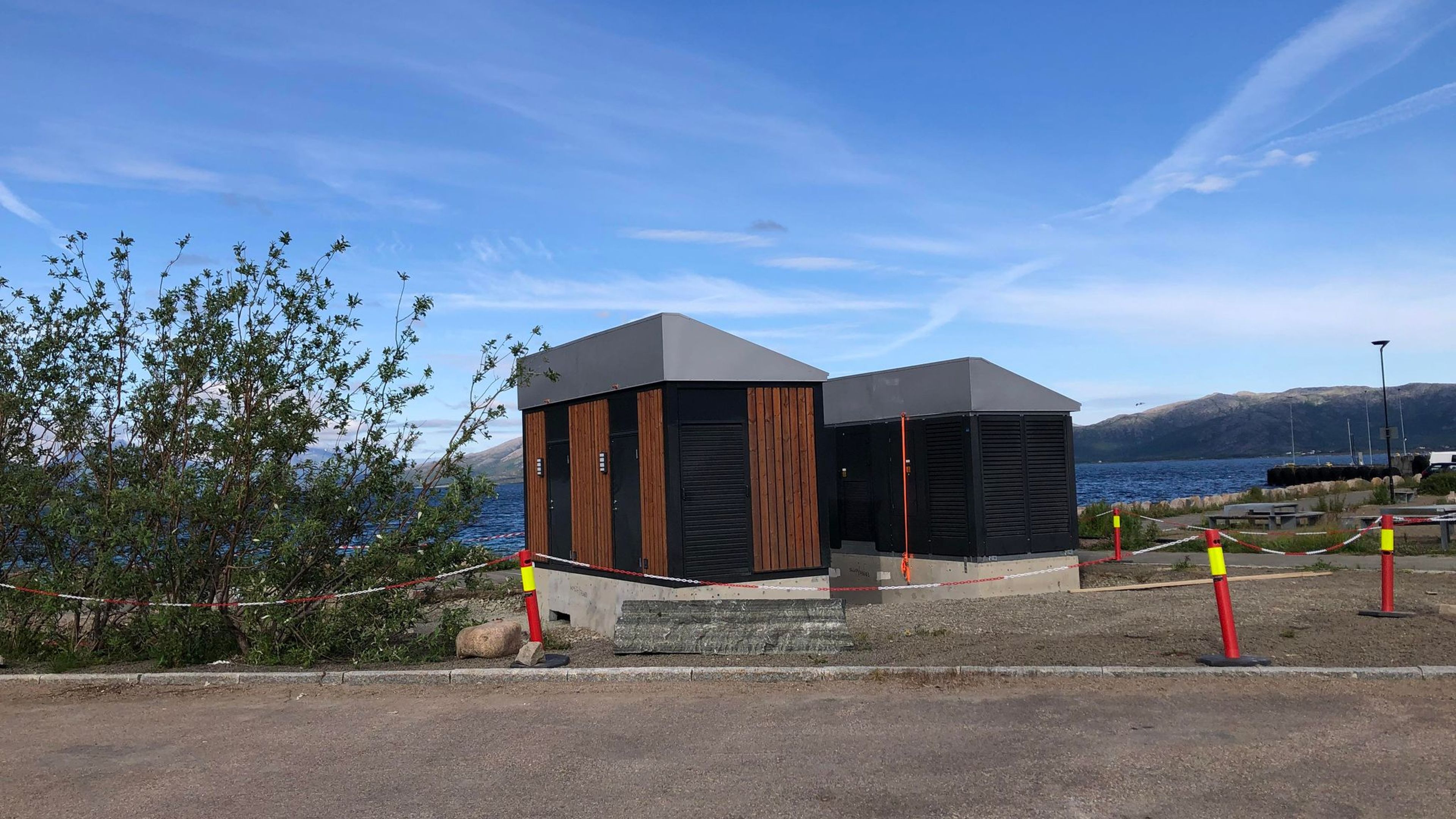
The Norwegian Public Roads Administration required a special design for both the substation and the insulated technical building. That meant a so‑called mono‑pitch or sloping roof with a 20‑degree pitch and a silver‑gray color. In addition, they wanted external cladding in Siberian larch.
“Because of the sanctions against Russia that was of course impossible, so we ended up with Norwegian pine, Royal-impregnated and in the customer’s preferred color,” says Bjørn Lade.
Transport challenges: Insulated technical houses with a full 3.80 meters height to accommodate Siemens 11 kV high-voltage contactors.
Tall Technical Buildings
Another challenge was transporting the insulated technical houses, which have an internal height of 2.8 meters to make room for Siemens 11 kV high-voltage contactors. Together with the special roof, this gave the technical houses a total height of 3.8 meters.
“So we had to transport them without roofs, with the roofs on a separate truck together with the concrete ring foundations. The two technical houses were delivered with tarpaulins fitted to protect the high-voltage equipment from moisture and dirt during transport north,” says Bjørn Lade.
Møre Trafo had its partner for insulated technical houses produce the special mono-pitch roofs. The transformers were built with enhanced protection using FR3 oil KNAN and a pressure relief valve.
Custom-Built: handling high power and custom Siemens equipment for 11 kV and 22 kV installed in insulated technical houses.
Demanding
– What made this job especially demanding for us was the high power levels we had to handle, and that the equipment to be installed at 11 kV and 22 kV was custom-built for these large power ratings. Siemens supplied the equipment, and we installed it before shipment. In particular, the two insulated technical buildings had to be designed for transport so that lifting and handling could cope with the weight of this equipment, explains Bjørn Lade.
The installation is one of the largest Møre Trafo has delivered. Møre Trafo has previously delivered the same solution, including to the Moss–Horten connection.